 Residence
  Location
History and Evaluation of the Bed Bug
 The evolution of obligate hematology (feeding only on blood) in the ectoparasitic Cimex lectularius seems to have originated and progressed from phytophagous (plant feeding) bugs that would predate by chance or accident, to predatory bugs feeding on invertebrates associated with nesting mammals or birds, to bugs that feed on the vertebrate host itself. The common flower bug, Anthocoris nemorum, which predates other insects and is occasionally herbivorous, is an example of a close relative to Cimex lectularius. Anthocoris nemorum will also pierce human skin and suck blood. In terms of bed bugs evolving to feed on humans, it has been hypothesised that bed bugs made the
switch from bats to Man, when Man was cave dwelling in pre-history. The ecology of the human race means they are an excellent host for bed bugs, as humans live communally in enclosed spaces, sleep at a predictable time in a predictable place and have high body temperature, are relatively hairless and have a rich blood supply to a relatively thin epidermis. Cimex lectularius is cosmopolitan in distribution and is therefore a worldwide problem.
Bed bugs were first recorded in the UK in 1583 (Usinger, 1966). In 1939 approximately four million people in Greater London were subject to bed bug infestations (Usinger, 1966). Bed bug infestations declined from 1939 onwards, most likely due to the introduction of residual insecticides. One survey showed that the number of bed bug treatments remained.
Bedbugs are also known by a variety of names including wall louse, mahogany flat, crimson rambler, heavy dragoon, redcoat, and simply "bug". Its names in other languages include meanings such as "stinker" (Frenchpunaise), "nightcrawler" (GermanNachtkrabbler), "bitter" (Sanskrituddamsa), "pursuer" (Portuguesepercevejoorperceveja, depending on the region), "flat" (Czechplostice), and "wall louse" (GermanWandlaus).
Bed bugs were first introduced into the Americas by the early colonists. Colonial writings of the early 18th century documented severe bed bug problems in the English colonies and in Canada, but not in Indian villages. Old sailing ships were notoriously infested with bed bugs, some so much so that some ships forbade passengers and colonists from bringing bedding on board. During the early 20th century, it was a rare American indeed who had never been bitten or at least seen a bed bug. Bed bugs were rated among the top three pests in and around structures. Surveys showed that as many as 1/3 of all residences were infested in some cities. In lower income areas, virtually all residences had bed bugs at one time or another. In these areas, bed bugs were 'œpublic enemy number one.'
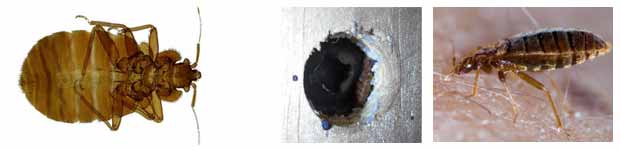
 Bedbugs evolved from what were once insects much like mosquitos. The atrophied remains of wings can be found upon the backs of bedbugs, and bedbugs still sometimes appear with the elongated aerodynamic body shape of a flying insect. A typical bedbug has body shape that is as flat and naroow as a credit card, which is a shape which allows bedbugs to slip through even very narrow cracks.. When a bedbug appears with the body shape of the flying bug from which bedbugs evolved, the body is not flat, but rather is tubular and more rounded.
My place was infested with bedbugs, and when I first saw these long, skinny bugs I did not immediately recognize them as being bedbugs. However they had the same reddish brown color of a bedbug. When you starve a bedbug they lose their reddish tinge and become golden tawny colored bugs that are almost transparent. The same thing would happen to these elongated bugs, and it wasn't long before I realized that these odd shaped bugs were in fact bedbugs.
Early History
 It is believed that bed bugs originated in caves in the Mediterranean region of the world, feasting on the blood of bats. When humans began to inhabit these caves, the pests found them as an equally suitable blood source. However, because cave dwellers moved from place to place frequently, they proved to be an unreliable and inconsistent food supply for the insects. It was not until the early establishment of villages and cities that the bugs' presence became a notable problem.
American History
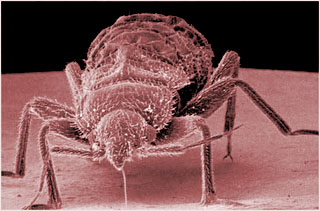 Manifest logs tell of sailors complaining about bed bug infestation aboard their European ships en route to America. Because of the magnitude of the problem, travelers were eventually asked not to bring bedding with them on their journey. The bugs, however, made their way across the sea and into the homes of the new settlers. Documentation of their existence in the New World reaches back to the 17th century. By the 20th century, bed bugs were so prominent that they were considered one of the top three household pests. Some cities had infestation in as much as 1/3 of all residences.
Bed bugs were a common problem up until World War II. In the 1950s, DDT and other pesticides were introduced that helped combat the rampant infestation. Soon, it appeared that bed bugs were almost obsolete in developed countries. In the 1970s it was determined that DDT and many other pesticides were harmful to humans, and they were subsequently banned by the U.S. government.
 bed bugsa genuine threat or is this so much media hype. Some argue that journalists are feeding the frenzied paranoia of a panicked citizenry. Others point to very real statistics that show a 70% increase in reported bed bug infestations in the U.S. in the past five years. In a national survey conducted for Pest Management Professional, University of Kentucky entomologist Michael Potter found, "A whopping 91% of respondents reported their organizations had encountered bed bug infestations in the past two years. Only 37% said they encountered bed bugs more than five years ago." Pest control companies that for decades had received no calls about bed bugs are suddenly receiving dozens. In large urban areas it´s not uncommon for companies to field 100 to 150 bed bug complaints a week, according to a National Pest Management Association survey.
After near eradication by DDT-based pesticides in the 1950s,bed bugs(Cimex lectularius) are on the rise. Your grandmother´s bedtime mantra -- "Sleep tight; don´t let the bed bugs bite!" '“ was rooted in the reality of pre-World War II life when bed bugs were commonly found in beds across the U.S. In the 1930s, people wallpapered their bedrooms with arsenic-laced wallpaper to kill bed bugs. Metal bed frames, considered less likely to harbor bed bugs, were the rage. Twice a year bedsteads were completely dismantled and scrubbed to keep bed bugs at bay. Until the insect-killing properties of DDT were discovered during World War II, no effective pesticide existed to eradicate bed bugs. Development of DDT-based insecticides after the war allowed America and most industrialized countries to stamp out bed bugs.
 Discovery of DDT´s cancer risk to humans and lethal threat to wildlife led to its banning in the early 1970s. By the mid-1990s, reports of bed bug infestations began to surface in the U.S., Canada, Australia and Western Europe. With no lethally effective pesticide available, bed bugs have multiplied and spread. "Since the mid-1990s, numbers of reported infestations have almost doubled annually," said Clive Boase, author of a bed bug study published by the Institute of Biology in London. Bed bug infestations in London have risen tenfold since 1996, Boase reported. According to National Geographic News, bed bug complaints to pest control companies increased 700% in Australia between 2000 and 2004 and 500% in the U.S. While these figures seem astonishing, keep in mind that if a pest controller received two bed bugs calls in 2000, an increase of 500% would equal 10 calls in 2004, not quite the "invasion" trumpeted in news reports. Still, last year bed bug infestations were reported in every state in the U.S., and reports are increasing exponentially each year. "This is a serious issue," Potter recently told the New York Times. "This will be the pest of the 21st century".
 How do these damned vermin get everywhere, is one question that leaves so much to be answered. If they are 'bed' bugs, why are they in my clothes? Well, there is no doubt in the fact that the damn things on your clothes are indeed bed bugs. bed bug infestation in clothes often happens when you leave your clothes untouched in your cupboard for too long. So as the bed bugs slowly gain entry into your home, they find a safe haven for themselves in your old clothes, as they can carry on with their lives without any human intervention. Quite a peaceful proposition for them isn't it? Well you certainly cannot live this way and need to know about getting rid of bed bugs in clothes as soon as possible.
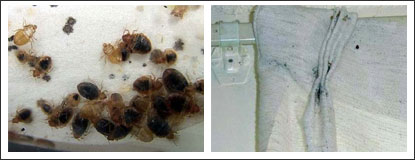 They said that once upon a time the world was almost freed from this despicable vermin, but they are back with a bang and are still one of the number one house pests, right up there with termites. The most common way in which the bed bugs spread is through luggage. Suppose you went for a trip and stayed in a hotel which was unfortunately infested by bed bugs. These bed bugs crawl into your luggage unexpectedly and unknown to you, travel to your home. A few days later you open the luggage and find a full colony of these dirty creatures. And now, you're running pillar to post, to find ways for getting rid of bed bugs from clothes. And you have to do it quickly, otherwise they will spread all over your house. So without further ado, let us quickly get to the topic of how to kill bed bugs.
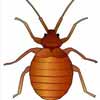 Hence, the US Department of Defense insists that the fabric steamer must be used at 120F and 20 to 30% relative humidity for 20 minutes to ensure that the bed bugs and their eggs are completely killed. Mattress or size of infestation. If there are holes or tears in the gauze fabric or fabric of the mattress, bed bugs and eggs may be inside, as well as outside. There are restrictions on how beds can be treated with insecticides.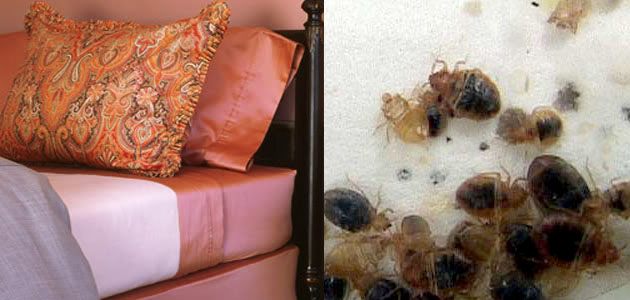
 Bed bugs are easy to transport in luggage and very hard to get rid of. For this reason they have become an especial nuisance for hotels, who are not eager to publicize their infestations. You can't tell whether a building or hotel room has them based on cleanliness - the bugs can thrive anywhere there are cracks and crevices to hide in. Bed bugs are becoming common in hotels, possibly because the bugs are developing resistance to sprays, or possibly because more toxic sprays have been outlawed. The bugs are showing up in luxury buildings and expensive resort hotels, so no one is immune to them. Bed bugs cannot fly, and you can kill them by encasing furniture or clothes in plastic; they need blood to live.
 5. If you see powder in the drawers or on the headboard, it is likely that the room has already been treated for bed bugs by an exterminator.
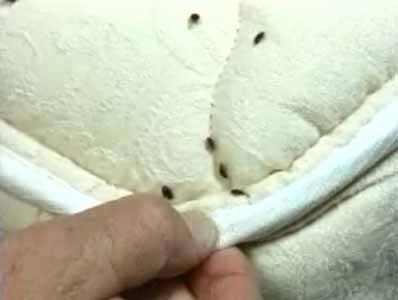 Blood excrement and exoskeleton shells are an indication of a bed bug brooding site, and if one brooding site exists, there are often more in the room. Next, look behind the head board of the bed and any nightstands that are in the area. Bed bugs have an affinity for wood, and are often found hiding in these areas. It is important to check these areas because the mattresses may have been cleaned, but the room could still be infested. Any bed bugs still alive after the bedding and mattress is treated will most likely be in these areas. They can not jump or fly, but can easily walk the distance from a night stand to your bed when you are asleep.
 Bedbugs (or bed bugs) are becoming an epidemic in hotel rooms throughout the United States. Larger cities, especially New York City are literally infested with them. Before staying in a hotel room for the night these days, it is best to spend five minutes and check the room for bedbugs. Some of the pictures of victims are downright gruesome. The bugs come in the night and bite along the thickest veins in your legs in the middle of the night where your slumber is at it's deepest level. Bedbugs are small black creatures, but you should be able to pick them out by following a few simple procedures. Here are some tips to and information on how to check for bed bugs around the hotel room.

 Bed bugs and their relatives occur nearly worldwide. Bed bugs became relatively scarce during the latter part of the 20th century, but their populations have resurged in recent years, particularly throughout parts of North America, Europe, and Australia. They are most abundant in rooms where people sleep, and they generally hide nearest the bed or other furniture used for sleeping. Bed bugs are most active in the middle of the night, but when hungry, they will venture out during the day to seek a host. Their flattened bodies allow them to conceal themselves in cracks and crevices around the room and within furniture. Favored hiding sites include the bed frame, mattress and box spring. Clutter around the room offers additional sites for these bugs to hide, and increases the difficulty in eliminating bed bugs once they have become established.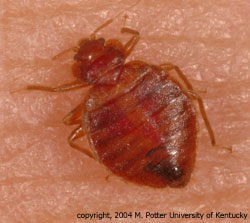
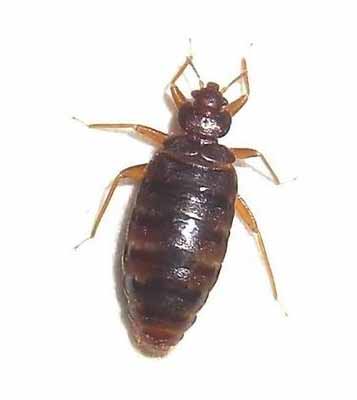
 Bed bugs are small, flat, oval, wingless insects (about one-fifth of an inch) that crawl at a steady rate and are visible to the naked eye. Similar to mosquitoes,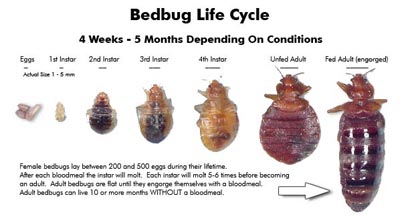
 Here is some advice for you to avoid having bed bug bites. First, by covering up your body, you are helping to prevent bed bug bites. Bed bugs do not like to burrow under clothing. You may be able to avoid bed bug bites by wearing pajamas that cover up as much of your skin as possible. Secondly, it is important to note that if you are using insect repellents to keep bed bugs out, this will not help. Third, some have found that using mosquito netting that has been impregnated with permethrin, a pesticide, may help to protect you against bed bug bites while you are sleeping.
  Bed bugs had been kept under control in most industrial nations in the last century with the development of appropriate pesticides. However, as people become more global in their travels and insects of all caliber become more resistant to chemical treatments, bed bug infestations have become common in some of the finest hotels and homes in the world. The good news is that bed bugs do not transmit diseases. They do, however, leave nasty welts or blisters where they bite, which later become red and itchy.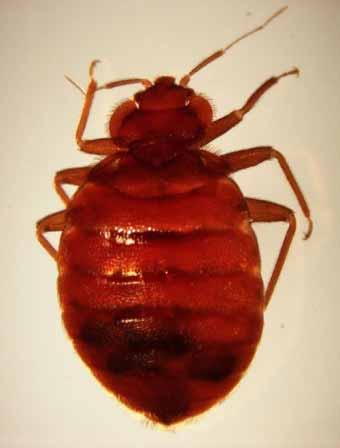
 They will reach their host either by crawling straight towards them, or climbing a wall and then across the ceiling until they feel a heat wave - when they jump down onto their host. The bug is attracted to the host by both its warmth and the presence of C02(carbon dioxide).
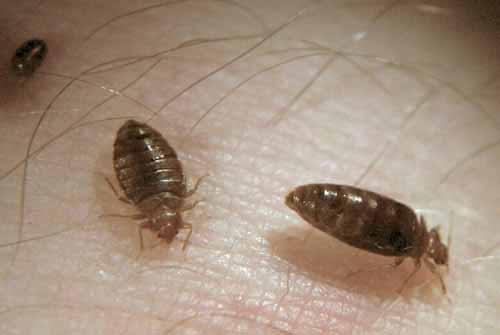 Bed bugs reproduce bytraumatic insemination, also known ashypodermic insemination. The males have hypodermic genitalia which pierce the females anywhere on their abomen and ejaculate sperm into the body cavity. The sperm diffuse through the insides and reach the ovaries, resulting in fertilization.
 When you are bitten a raised red bump of flat welt (also called a papule or a wheal) will appear, often accompanied by very intense itching. The anesthetic contained in the bed bugs saliva causes an allergic reaction which results in the red bumps. They look very similar to mosquito bites, but last a lot longer. Signs and symptoms of bug bites will only affect the surface of the skin.