 Residence
 Location

Categories
- Bed Bug
- Bed Bug Cream
- BED BUG DATABASE
- Bed Bug Home Remedies
- Bed Bug Oil
- Bed Bug Remedies
- Bed Bug Spray
- Bed Bugs New York
- Bed Bugs Vancouver
- Bed Bugs World
- Bed Bugs American Samoa
- Bed Bugs Canada
- Bed Bugs Guam
- Bed Bugs North Mariana islands
- Bed Bugs Puerto Rico
- Bed Bugs United States
- Bed Bugs Alabama
- Bed Bugs Alaska
- Bed Bugs Arizona
- Bed Bugs Arkansas
- Bed Bugs California
- Bed Bugs Colorado
- Bed Bugs Connecticut
- Bed Bugs Delaware
- Bed Bugs Florida
- Bed Bugs Georgia
- Bed Bugs Hawaii
- Bed Bugs Idaho
- Bed Bugs Illinois
- Bed Bugs Indiana
- Bed Bugs Iowa
- Bed Bugs Kansas
- Bed Bugs Kentucky
- Bed Bugs Louisiana
- Bed Bugs Maine
- Bed Bugs Maryland
- Bed Bugs Massachusetts
- Bed Bugs Michigan
- Bed Bugs Minnesota
- Bed Bugs Mississippi
- Bed Bugs Missouri
- Bed Bugs Montana
- Bed Bugs Nebraska
- Bed Bugs Nevada
- Bed Bugs New Hampshire
- Bed Bugs New Jersey
- Bed Bugs New Mexico
- Bed Bugs New York
- Bed Bugs North Carolina
- Bed Bugs North Dakota
- Bed Bugs Ohio
- Bed Bugs Oklahoma
- Bed Bugs Oregon
- Bed Bugs Pennsylvania
- Bed Bugs Rhode Island
- Bed Bugs South Carolina
- Bed Bugs South Dakota
- Bed Bugs Tennessee
- Bed Bugs Texas
- Bed Bugs Utah
- Bed Bugs Vermont
- Bed Bugs Virgin Islands
- Bed Bugs Virginia
- Bed Bugs Washington
- Bed Bugs Washington DC
- Bed Bugs West Virginia
- Bed Bugs Wisconsin
- Bed Bugs Wyoming
- BedBug Removal
- BedBugs in Michigan
- Canada Bed Bugs
- Do it yourself Bed Bug
- Exterminator Bed Bugs
- Health
- Pest Inspection
- Toronto Bed Bugs
- Welcome to Bed Bugs
Registry Sites List
- Bronx Bed Bug Registry Infestation Maps, Residential And Hotel
- Brooklyn Bed Bug Registry Infestation Maps, Residential And Hotel
- Manhattan Bed Bug Registry Infestation Maps, Residential And Hotel
- Nyc Bed Bug Registry Infestation Maps, Residential And Hotel
- Queens Bed Bug Registry Infestation Maps, Residential And Hotel
- Staten Island Bed Bug Registry Infestation Maps, Residential And Hotel
Recommended Sites
Category Archives: Bed Bugs World
News Links:
Bed Bug Pictures, Symptoms and Treatment | Preventing Bites at …
Questions? Enter keywords in search box below:
- How to identify and treat an outbreak -
Summary: Bed bugs (often spelled "bedbugs") are small blood-sucking insects. While still relatively rare in the US bed bugs have recently become important pests in motels, hotels, and other high traffic places. Learn how to identify bed bugs and prevent bites from these critters.
Bed bugs are flattened (unfed) broadly oval insects, and about 1/4" long (see photo right) when full grown. As they feed and fill with blood they become less flattened and more "football" shaped (see front and side views). These true bugs (Hemiptera) are reddish brown in color and lack wings even as adults. E-mail images to our Insect Id Service to confirm an infestation.
Bed bug larvae (nymphs) look like small adults and there is no pupal stage between nymphs and adults. All stages of bed bugs, except eggs, bite to obtain the blood they need in order to grow.
common misspelling: bedbug (no space); since bed bugs are true bugs the proper spelling is "bed bug" with a space between the two words.
Bed bug (4th instar larva, unfed) - about 1/5". After feeding bed bugs become less flattened, more rounded.
Bed bugs bite at night and hide during the day. Hiding places include the seams and folds of mattresses, cracks and crevices of bedside furniture, floor moldings and other protected spaces (see Bed Bug Hiding Places). They can survive long periods off the host without feeding, or they may feed on an alternate warm-blooded animal but humans are their preferred host. Heavily infested rooms often have a distinctive odor which is produced by scent glands on the bugs themselves. While digesting a meal bed bugs excrete black fecal material (digested blood) that accumulates where they hide and is characteristic of an infestation.
Since bed bugs don't fly, and not able to walk very far on their own, they rely on us to move them from one place to another. Rooms generally become infested because bed bugs are carried into the room on our belongings (see How to Clean Belongings). The bugs can hide themselves in pillows, blankets, sleeping bags, backpacks, towels, clothing, and so forth, when transported from an infested room to one that is not infested.
Bed bugs bite with piercing and sucking mouth-parts, similar to mosquitoes, and bites result in local swelling and irritation like a bad mosquito bite. Bites can occur in lines or clusters. Bed bugs do not transmit human disease.
See original here:
Bed Bug Pictures, Symptoms and Treatment | Preventing Bites at ...
Posted in Bed Bugs Idaho
Comments Off on Bed Bug Pictures, Symptoms and Treatment | Preventing Bites at …
Where Do Bed Bugs Live? – Bed Bug Detection & Bed Bug Life …
Bed bugs (picture on the left) likely get their name from their habit of feeding on humans while they sleep in their beds. They are found in virtually every place people tend to gather, including residences, hotels, schools, offices, retail stores and even public transportation.
If you do identify bed bugs in your home, contact a pest professional promptly. They will be able to inspect your home, confirm the species and recommend a course of bed bug treatment.
Bed bugs like to travel and are good hitchhikers. They will hide in suitcases, boxes and shoes to be near a food supply. They are elusive, nocturnal creatures. They can hide behind baseboards and in cracks, crevices, and folded areas of beds, bedding and adjacent furniture, especially mattresses and box springs. Bed bugs can also hide in electrical switchplates, picture frames, wallpaper and nearly anywhere inside a home, car, bus, or other shelter. Bed bugs usually come out at night for a blood meal. However, they are opportunistic insects and can take a blood meal during the day, especially in heavily-infested areas. Bed bugs usually require 5-10 minutes to engorge with blood. After feeding, they move to secluded places and hide for 5-10 days. During this time in the bed bug life cycle, they do not feed but instead digest their meal, mate, and lay eggs.
So where do bed bugs live? Bed Bugs like to hide in small cracks and crevices close to a human environment. They can be found behind baseboards, wallpaper, upholstery, and in furniture crevices. Beg bugs are also known to survive in temporary or alternative habitats, such as backpacks and under the seats in cars, busses and trains.
Although bed bugs can dine on any warm-blooded animal, they primarily dine on humans. Bed bugs do not transmit diseases, but their bites can become red, itchy welts.
Follow this link:
Where Do Bed Bugs Live? - Bed Bug Detection & Bed Bug Life ...
Posted in Bed Bugs Guam
Comments Off on Where Do Bed Bugs Live? – Bed Bug Detection & Bed Bug Life …
California’s Bed Bug Laws and Tenant Rights | eHow
money section Saving & Spending Real Estate Business & Career Insurance Retirement Investing eHow Now eHow Personal Finance Real Estate Renting a Home California's Bed Bug Laws and Tenant Rights
Peyton Brookes
Peyton Brookes is a workforce development expert and has written professionally about technology, education and science since 2009. She spent several years developing technology and finance courses for social programs in the Washington, D.C. area. She studied computer and information science at the University of Maryland College Park.
Cimex lectularius, or the common bed bugs, feed on the blood of mammals and are adapted to living with humans, according to the University of Kentucky. These pesky insects are the source of physical discomfort, restless nights and can become a financial burden. They appear in a number of places, including hotels, college dorms and the average home or rental property despite cleanliness. California enforces an "implied warranty of habitability," which addresses residential vermin.
Bed bugs have a knack for tucking their brownish, flat, oval-shaped bodies into the most obscure places and are often mistaken for ticks. Their size and ability to successfully hide contribute to the difficulty in controlling them. Signs of bed bugs include dried excrement that appears as a reddish or brown stain on mattresses and box springs and blood smears on bed sheets according to the University of Kentucky. A moderate to heavy infestation encourages them to spread out at which time they can be found anywhere in the home. These small insects hide during the day and feed on their hosts at night. Itchy welts, bumps or bites that appear after sleeping are a sign of an infestation. Though they may not transfer disease and the physical effect is minimal, bed bugs can cause insomnia due to the fear of being bitten at night.
The eradication of bed bugs requires diligence, persistence and patience. It may also require a large sum of money. A typical family may spend up to $5,000 on inspections, storage fees and exterminators, and owners of large rental properties can spend up to $80,000 according to "The New York Times." As a result, tenants and landlords may tussle over the responsibility for the appearance of the bugs. This is where California's "implied warranty of habitability" addresses the very basic requirements for a suitable resolution.
The California Supreme Court case Green v. Superior Court set the standard for California's habitability law. Under this law, a unit must provide "clean and sanitary buildings, grounds, and appurtenances (for example, a garden or a detached garage), free from debris, filth, rubbish, garbage, rodents, and vermin," states the California Department of Consumer Affairs. The "implied warranty of habitability," established in the case makes a landlord responsible for the repair of serious defects that affect habitability. Tenants who suspect bed bugs or other vermin have legal rights and must complete a process to resolve the issue.
In California, tenants have the right to live in a habitable unit, but they must meet their own responsibilities. Keeping the unit clean and free from debris are important even though bed bugs appear in the cleanest of homes. Under California Civil Code Section 1942, tenants can repair and deduct from the rent. In order to repair and deduct, the tenant must notify the landlord in writing of the issue, wait a reasonable period and hire a qualified professional. The reasonable period is 30 days unless the issue is severe. The total expenditure cannot exceed one month's rent, however the option is available twice in a 12-month period. Essentially, the tenant can repair and deduct up to two months of rent in a 12-month period.
Tenants also can move out of the unit immediately without notice. The tenant should still request the landlord eradicate the insects immediately, take pictures of the infestation, provide a letter stating they are vacating under Civil Code Section 1942 and request a final walkthrough. Prior to immediately vacating, consulting an attorney can provide valuable insight into the results of a possible legal battle for property abandonment.
California's Bed Bug Laws and Tenant Rights. Cimex lectularius, or the common bed bugs, feed on the blood of mammals and are...
See the original post here:
California's Bed Bug Laws and Tenant Rights | eHow
Posted in Bed Bugs California
Comments Off on California’s Bed Bug Laws and Tenant Rights | eHow
South Florida Bed Bug Heat Treatment | West Palm Beach Bed Bug …
Heat Treatment
Click Here To Prepare For Heat Treatment
It was a pleasure to meet with you today and to share my plight with those nasty bed bugs and how I am now rid of them using Advanced Pest Control's services.
South Florida bed bug heat treatment provides area homeowners and business owners a way to eradicate their properties from bed bugs without the use of harmful chemicals. At Advanced Green Pest Control, we use heat technology to effectively kill bed bugs, often in a single treatment, without exposing our clients to dangerous pesticides.
In the past, chemicals were used to kill and control these infestations. However, these bugs are developing immunities to commonly used chemicals, and extermination companies are having to use more and more treatments to effectively kill off the pests. In fact, in a survey of pest control operators performed by the University of Massachusetts, 68 percent of those reporting had to use three or more treatments to effectively get rid of the pests. In your home, this means your family is being exposed to toxins three or more times!
We also advocate the use of heat to get rid of the bugs because of the resistance the critters are developing to pesticides. As the bugs become resistant to one chemical, exterminators must either increase the amount of the chemical, which then increases your exposure, or switch to a different chemical.
Chemical pesticides used for these bugs also wreak havoc on the ecosystem. DDT, once an effective treatment, has been banned because of its effect on wildlife after leaching into the environment. We believe that offering an environmentally friendly option to deal with bed bugs simply makes sense, because we want to protect our natural resources for your children and grandchildren.
Heat treatment works better than conventional pesticides, does not damage the environment, and does not create potential toxins for your family to be exposed to. If you face an infestation, call Advanced Green Pest Control today and ask about our South Florida bed bug heat treatment.
Read the original:
South Florida Bed Bug Heat Treatment | West Palm Beach Bed Bug ...
Posted in Bed Bugs Florida
Comments Off on South Florida Bed Bug Heat Treatment | West Palm Beach Bed Bug …
WVU Ext – Agriculture & Natural Resources | Bed Bugs
Sleep tight, dont let the bedbugs bite! Over the past 30 years, this phrase has had little use, but bedbugs are reemerging in the United States, prompting people to take caution before bedtime.
Bedbugs have plagued humans for centuries. Historical records show that the household pests have been linked with humans for more than 3,000 years. Often incorrectly associated with poor housekeeping and unsanitary conditions, bedbugs were originally a pest of the rich. During the 17th century, bedbugs thrived in homes of the wealthy where they were insured a warm and soft environment to feed and breed. Following World War II, bedbugs were largely eradicated from the United States through the use of DDT and other pesticides. However, some survived, especially in developing countries, and over time they have repopulated many areas of the world.
Bedbugs are known as ectoparasites, a group of insects that live outside on the bodies of humans, rats, guinea pigs, rabbits, bats, poultry, birds, and other warm-blooded animals. During the day, they hide in cracks and crevices of bed frames and headboards, behind wallpaper and wood work, inside mattresses and box springs, and even inside pictures. At night, they come out to feed, gorging themselves on blood.
There are many species of bedbugs. The common bedbug, Cimex lectularius, and the bat bedbug, C. adjunctus, are frequently found in homes of the northeastern United States. C. hemipteris occurs in subtropical and tropical areas such as Florida.
Bedbugs are not native to North America. They arrived with the first colonists who crossed the Atlantic from Europe. Until the 1940s, they thrived in the United States as a result of improved living conditions and an increase in woodwork in homes. Following a change in style to less ornate homes and furnishings, an increased use of electric vacuum cleaners, and the application of DDT, bedbug populations plummeted over the next 50 years. However, a resurgence of bedbugs has occurred in the past 10 years due to people immigrating or visiting the United States from countries having high bedbug populations. Bedbugs are easily transported by people from one place to another on clothing and used furniture and through walls in apartment buildings and hotels. Bedbugs can also be transmitted to humans from bird and bat nests that may be present in homes.
Bedbugs can be identified by their eggs, young, and adults. Adult bedbugs are light tan to reddish brown in color with oval-shaped, wingless bodies. Their upper bodies are wrinkly and covered with short, blond hairs. Prior to feeding, they are 1/4 to 3/8 long (about the size of a pencil eraser) and almost as flat as a piece of paper. After feeding on blood, they become bloated and dark red in color, resembling an animated drop of blood.
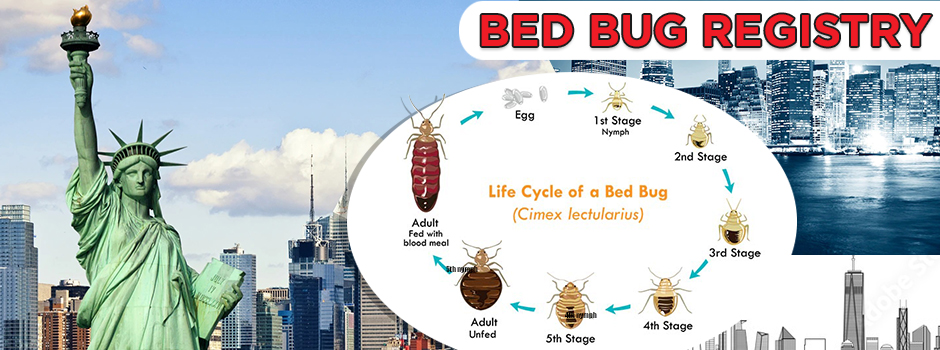
Young bedbugs are nearly colorless but look like smaller adults. The young (nymphs) go through five stages of development before they become adults. Each time they progress to another stage, they have to shed their skin (molt), requiring them to feed on blood.
The eggs of bedbugs are white, pear-shaped, and about the size of a pin head with a lid at one end where the young will emerge. Clusters of 10 to 50 eggs each are laid in crevices. They usually hatch in about 10 days. Bedbugs take about 21 days to mature from egg to adult.
Bedbugs thrive in numbers so you may find adults, young, and eggs all in the same location.
Bedbugs can breed year-round inside buildings. In West Virginia, they have two or three generations of young per year. They live about 10 to 12 months, and females can lay 100 to 500 eggs during their lifetime, depending on the warmth of the area and how much food it provides. Bedbugs can survive only at temperatures between 48 F and 97 F.
Posted in Bed Bugs New Foundland & Labrador
Comments Off on WVU Ext – Agriculture & Natural Resources | Bed Bugs