Category Archives: Bed Bugs United States

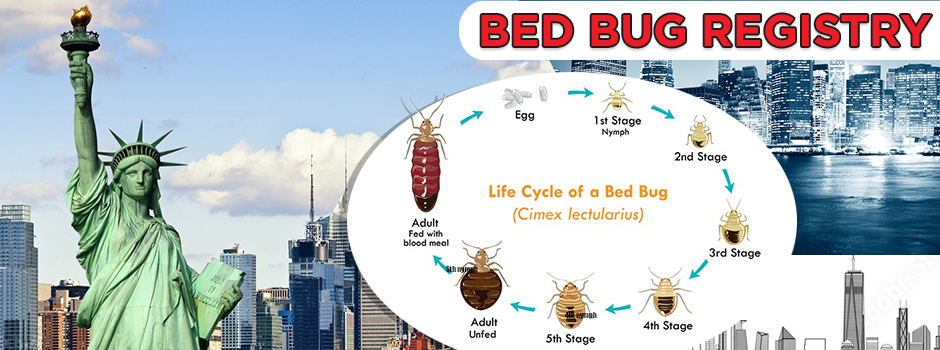
  United States, Bed Bug Registry Map
  Sunday 28th of December 2025 19:56 PM


Hotel   Residence   Location   

Zoom In on the above map using the map controls for more detail, and select an incident by clicking on it for address details.

Use the field below to search for incident reports around an address - it will also auto suggest up to 10 incident addresses as you type.


Latest Bed Bug Incidents and Infestations

Incident Radius: 3000 Miles

We cannot vouch for the truthfulness of any report on this site. If you feel a location has been reported in error, or want to dispute a report, please contact us.

News Links:

9 Bugs That Look Like Bed Bugs – PestRadar

Due to the recent increase in bed bug infestations, waking up to find a bug in your bedroom can cause loads of anxiety and worry. Before you start resorting to desperate measures, take some time to learn to recognize bed bugs and common bed bug imposters.

Bed bugs are small, brownish-red insects that feed on blood. They are attracted to warmth and carbon dioxide, so they often live in bedding or mattresses and emerge at night to feed on sleeping humans.

The anatomy of a bed bug consists of an oval shaped body, a small broadly attached head, and compound eyes. Bed bugs are about the size of an apple seed (4-5 mm in length). They have segmented abdomens with tiny, colored hairs that give them a striped appearance. Their antennae are shorter than their legs and have four segments. Bed bugs do not have wings and must crawl to get around.

Now that you can identify a bed bug, take a look at common bugs mistaken for bed bugs and how you can tell them apart.

Appearance: Bat bugs are nearly identical to bed bugs. In fact, it requires a microscope to tell the two bugs apart. The length of hairs on the body segment below the head, known as the pronotum are longer on bat bugs and are typically at least as long as the width of the bat bugs eye.

Diet: Bat bugs feed strictly on blood, but as the name infers, they prefer to feed on bats or sometimes birds, rather than humans. If their source of food leaves or is eliminated, they will go in search of other food and may then bite humans.

Habitat: Bat bugs are mostly found in attics, chimneys, near bird nests, or where bats are present. If they become desperate for food, they will migrate to mattresses and bed frames.

Appearance:Like Bat Bugs, Swallow bugs are also extremely close to bed bugs in appearance. Through magnification you can see that their bodies are covered all over in fine, long hair that is longer than the width of its eye.

Diet: A swallow bugs preferred blood meal is a cliff or barn swallow. When their primary food source is not available, swallow bugs will feed on human blood.

Habitat: Swallow bugs are typically found living in swallow holes or nests, but will move into homes and businesses if necessary for survival. In homes, swallow bugs are often found coming out of walls or on ceilings, especially on upper floors close to possible swallow dwellings.

Appearance: Spider beetles are reddish-brown to black with shiny globe shaped abdomens. They are smaller than bed bugs, measuring between 1.5-3.5 mm long. Some varieties have cream colored hairs on their head and legs, while others are completely brown. Spider beetles have long legs, 2 body segments, and 2 long antenna. When seen from above, these beetles resemble a spider.

Diet: Spider beetles are scavengers that eat cereals, grains, dried fruit, and even bird or rodent droppings. They do not typically bite humans.

Habitat: Spider beetles forage at night and are most often found in household pantries or attics. During the day, spider beetles will hide in dark cracks and crevices near their food source.

Appearance: An adult book louse is much smaller than an adult bed bug, growing only from 1-1.5 mm long. They are translucent white, gray or light brown and have three clear body segments. Sometimes booklice are mistaken for bed bug nymphs because of their light color, but their elongated shape and pronounced head helps to identify them.

Diet: Booklice feed on fungi and mold, as well as cereals, pollen, fragments of dead insects, and other things that have mold growth. The do not bite or feed on humans.

Habitat: Since they eat mold and fungi, booklice are most often found in moist places like kitchens and bathrooms. If you see them in the pantry, it may signal mold growth in the food. They can also be found under wallpaper, in furniture, on the sides of windows, and other humid places.

Appearance: At the nymph stage, cockroaches are similar in size to bedbugs and are the same characteristic reddish-brown color. They have a small head with a flat body, but are more cylinder shaped than bed bugs. A good distinguishing factor is that cockroach nymphs, like full grown cockroaches, have long antennae and two cerci (appendages) at their rear end.

Diet: Cockroach nymphs do not feed on blood like bed bugs. Cockroaches are omnivores that eat both plants and animals and are known to eat almost anything. They prefer sweets, starches, and meats, but if food grows scarce, they may potentially bite humans.

Habitat: Cockroaches live near food sources where it is dark, warm, and moist. In homes, the bathroom and kitchen are favorite dwelling places, and cockroaches may cluster under sinks, in cupboards, behind the refrigerator, or in cracks and crevices. They are most active at night when they come out to forage.

Appearance: Wood ticks, also known as dog ticks, come in a range of colors, but are often brown with gray patterns on their backs. Wood ticks have a wide, oval body with a flattened top that expands and makes their shape more round as they feed on blood. Ticks can range in size from 3.5-15 mm depending on when they ate last. Ticks have two primary body sections and are members of the arachnid family, which means that they have eight legs.

Diet: Like bed bugs, ticks survive on the blood of humans and animals. While bed bugs bite in lines or clusters, ticks will find one warm place to latch on and then burrow their head into the skin until they have finished eating.

Habitat: Ticks live primarily in wooded locations in tall grass, leaves, shrubs, and other brush. They do not jump or fly, but instead cling on to passing humans or animals. The most common places to find ticks indoors are on pets, near pet dwellings, in small crevices, or in between floor boards.

Appearance: Fleas are black to reddish brown and are smaller than bed bugs, ranging from 1.5-3.3 mm long. They also appear narrower and more oval shaped. Fleas are flat in the vertical plane, whereas bed bugs appear flat horizontally. Fleas also have long, powerful legs with the hind pair being thicker and adapted for jumping.

Diet: Fleas are also blood feeders. Fleas prefer animal hosts over human ones. If an animal isnt close by, however, fleas will not hesitate to bite and feed on humans.

Habitat: In the outdoors, fleas prefer to live in shady, cool places with lots of vegetation. When they find a host, they can hitch a ride into homes. Fleas generally tend to congregate in carpets, on pets, or in areas where pets sleep or spend time.

Appearance: Black carpet beetles are approximately 5 mm long and round in shape. They typically have shiny black bodies with brown legs. There are many other varieties of carpet beetles that will vary in color and can have brown, gray, or even yellow markings. Unlike bed bugs, carpet beetles have wings and can fly.

Diet: Carpet beetles are attracted to flowers and feed on pollen and nectar. They also eat a variety of animal products like silk, hair, wool, and even other dead insects. Carpet beetles do not bite humans, although the bristly hair of a carpet beetle can cause an allergic reaction on some people, which can lead to red skin rashes and welts.

Habitat: The preferred habitat of the carpet beetle is bird, rodent or insect nests. Once they enter homes, they can often be found between walls, in chimneys, crawlspaces, attics and basements, or anywhere there are indoor plants or dead insects.

You find a creepy-crawly in your home and have used your new found knowledge to identify it as a dreaded bed bug now what? While they are difficult to get rid of, with a little patience it can be done.

It is possible to try do-it-yourself bed bug removal. This consists of deep cleaning your home, washing and drying all textiles in high heat, and sometimes chemical treatments as well. While it can be done, it is important to follow proper instructions for best results and safety.

If you have a large bed bug problem or cannot completely eliminate the bed bugs after a few attempts, it might be time to call a professional exterminator that is certified and specializes in bed bug removal. Pest management companies use an integrated approach to ensure that the adults as well as the eggs are eliminated. Bed bugs and their lookalikes can be tricky to identify and treat, but with a little knowledge you can take back your home.

Continued here:
9 Bugs That Look Like Bed Bugs - PestRadar

Posted in Bed Bugs Washington | Comments Off on 9 Bugs That Look Like Bed Bugs – PestRadar

Bed Bugs in the Washington DC Area | Capital K9 Bed Bug

At Capital K9 Bed Bug Solutions, we keep up on news stories around the nation relating to bed bugs.

Over the last few weeks, there have been a number of stories that highlight what researchers have been saying for years: bed bugs are hitchhikers and can show up just about anywhere.

To illustrate this point, here are some of the stories that were featured over the past few weeks:

Silver Nugget Restaurant in Las Vegas closed for 24-hours due to bed bugs

Bed Bugs discovered on Chicagos commuter train

Man bitten by bed bug on Walmart scooter

Bed bugs found in movie theater

School trip cut short by bed bug infestation

Most of the time, our clients are able to track the source of the bed bug infestation, but often people just have no idea where the bugs originated.

While the news stories above are not local stories, there is no reason to believe that bed bugs wouldnt be interested in visiting restaurants, movie theaters, and commuter trains in the Washington D.C., Maryland and Northern Virginia.

Actually, we live in an area that ranks higher on the list of bed bug infested cities than some of the cities featured above. Indeed, bed bugs in the Washington DC area statistics make DC the 2nd highest infested metropolitan area after Baltimore.

So what can you do, given that almost all of us spend time in public places? The only real answer is to live your life knowing that the odds of the average person getting bed bugs is still slim in spite of the fact that bed bugs are among us.

While you may not be able to prevent a bed bug introduction, early detection is the key. If you ever experience unexplained bites, small black or red stains on the sheets or bedframe or actually see a bug, it should not be ignored.

Simple monitoring is a great first step for many people if you havent seen a bug or black stains on bedding or furniture (check the box spring!) and are unsure.

However, if the problem persists and if you see the black stains or an actual bug, calling a professional is the next step.

Bottom line, dont live in fear of bed bugs but a general awareness of the problem is helpful in ensuring that a bed bug introduction does not become a full-blown infestation.

Read more from the original source:
Bed Bugs in the Washington DC Area | Capital K9 Bed Bug

Posted in Bed Bugs Washington | Comments Off on Bed Bugs in the Washington DC Area | Capital K9 Bed Bug

Bed Bug Furniture Removal Minnesota | 11th Hour Clean

Bed Bug Furniture Removal Minnesota

Bed bug infestation is on the increase across the USA. Once these biting, blood-sucking insects invade your home, apartment, office, hotel, or business, they are extremely difficult to get rid of. With a lot of time, patience, severe heat and chemical treatments, and constant cleaning and vacuuming, you can eventually be bed bug free. Its a long, painful, expensive process, and often re-infestation occurs. Larvae and eggs are difficult to eliminate because they find several hiding places. The quickest solution and easiest for you is to have 11th Hours trained technicians remove the infested furniture and dispose of it properly without spreading bed bugs to other areas.

We will safely contain and dispose of any bed bug infested furniture following all state, federal, and local laws and regulations. Our procedures will not contaminate any other areas due to proper containment and disposal of infested furniture. 11th Hour employees are all highly trained and have worked on many bio-hazard scenes, which has provided us the knowledge of preventing cross contamination in a variety of scenarios. Even though we do not consider bed bugs a bio-hazard, they are a nuisance, highly spreadable, difficult to get rid of, and must be handled in a very specific manner.

We know a bed bug infestation is not your fault, we do not want you to ashamed or embarrassed. Bed bugs are tricky little creatures and it only takes a short exposure to them to become highly contaminated. Hotel rooms reportedly are on the rise for having bed bug occurrences, carefully check rooms before staying in them. Ever do laundry in public laundromats? Make sure you take your laundry to the facility in a sealed plastic bag and after drying take directly from dryer to another clean plastic bag, seal it and fold clothes at home. This will significantly reduce chances of having little hitchhikers coming with you. It is a priority in our company to be compassionate, understanding, and non-judgmental, making sure, you, our customer are completely satisfied.

If you live in MN and you or someone you know are dealing with a bed bug infestation, give us a call. We are available 24/7 to answer questions, inform you of our procedures, and discuss prices. We accept all major credit cards, in addition to checks and cash. Call us and we will be happy to assist you. (612) 255-6384

The rest is here:
Bed Bug Furniture Removal Minnesota | 11th Hour Clean

Posted in Bed Bugs Minnesota | Comments Off on Bed Bug Furniture Removal Minnesota | 11th Hour Clean

Pecos TX Bed bug Hotel and Apartment Reports

Checked into my room, first floor, first thing I saw when I opened the door was a 2 inch cockroach on the floor. I thought it was dead but it was very much alive and was not fun to get out. Trying to...

Checked in astound 1030pm. At 11pm i laid on top of the comforter. A few minutes later i had a bed bug crawling on my left leg. I smacked it and checked the rest of the bed. I continued to lay above t...

Recommended tips after hotel check-in: 1. Pick up the mattresses in the rooms and look under it. Check around the edges of the box springs. 2. Check under the box spring. 3. Lift up each headboard an lie it on the bed. Carefully inspect the hole where the headboard was lifted out of. Also, inspect all niches and corners of the headboard. 4. If you decide to stay in the hotel, do not put any clothes in dressers. Keep them in your luggage and your dirty clothes in plastic bags.

View original post here:
Pecos TX Bed bug Hotel and Apartment Reports

Posted in Bed Bugs Texas | Comments Off on Pecos TX Bed bug Hotel and Apartment Reports

Bed Bugs In Maryland Schools | What Parents Need To Know

Every time we turn around, there seems to be another news story about bed bugs. These blood-eating pests are being found in libraries, movie theaters, retirement homes, daycares, retail stores, apartment complexes, and the list goes on and on. In this article, we're going to focus on schools--specifically kindergarten through twelfth grade. If you're a parent of a student, here's what you need to know.

These are hitchhiking pests. Understanding how they spread is key in preventing them from spreading to your home.

There is a belief that bed bugs only infest dirty homes. This is not true. They have been found infesting the cleanest of environments. This is because bed bugs are not drawn to filth. They are attracted to areas where humans sleep or lounge. Therefore, they can be brought into a school on any child, which makes controlling the spread of these bugs difficult. It isn't a simple matter of checking students for proper hygiene.

It is also important to point out that bed bugs can come in on teachers and staff. This pest is not limited to traveling only on children. An immature bed bug nymph is as small as the tip on a pen and mostly transparent. This is not a bug you're going to easily notice.

Why do teachers, staff, or students bring bed bugs in from their home? Don't they know that bed bugs spread this way? Yes. And, while some may go to school knowing that they have a bed bug infestation, most don't realize they have one. Bed bug infestations often go unnoticed for months. During this time, everyone living in the home has the potential to spread bugs to another location.

How can an infestation go on for months? Don't bed bugs leave painful welts when they bite? They can. But they don't always leave welts. As much as 30% of people who are bitten have no reaction to these bites, even when bitten repeatedly. A slightly higher percentage have no reaction at first but develop a more pronounced reaction over time.

There are two primary ways bed bugs spread to schools, and subsequently, to other homes. Immature bed bugs get into objects that are carried to and from school or they lay eggs on these items. The spread of a bed bug infestation by immature nymphs requires these bugs to crawl from an infested item to another item. The spread of an infestation by eggs usually occurs when an object is transferred from one student to another. This may be an item of clothing, a book, a bag, a piece of furniture, or even an electronic device.

DIY methods for preventing an infestation of bed bugs are a lot of work and are not 100% effective. Since these are hitchhiking bugs, a focus must be placed on inspecting items that come and go from your home.

Wash clothing on the hottest temperature to kill bed bugs in all stages of development.

Check all objects coming and going for tiny white eggs, black streaks, blood stains, insect casings, or these tiny bugs.

Keep active communication with you children about what bed bugs look like and what signs to be aware of.

Keep clutter in your home to a minimum so it is easier to see signs of these bugs.

Check mattresses, box springs, and upholstered furniture periodically for black streaks, black patches, tiny black droppings, shed insect casings, brown blood staining, tiny white eggs, or the bugs themselves.

The best and easiest way to get rid of bed bugs is to have a pest controller do routine K9 Bed Bug Inspections. Dogs have a powerful sense of smell that allows them to locate these pests. This is a method used by resorts and hotels to maintain a bed-bug free environment for their guests. Without routine inspections, it is impossible to safeguard against a bed bug infestation. These insects don't come in from your yard. They come in on you, your spouse, your kids, your extended family, your friends, and the friends your kids invite over.

Make K9 Detection Services a part of your ongoing pest plan. Reach out to us today to schedule service and get your defenses in place before these bugs take root.

More here:
Bed Bugs In Maryland Schools | What Parents Need To Know

Posted in Bed Bugs Maryland | Comments Off on Bed Bugs In Maryland Schools | What Parents Need To Know