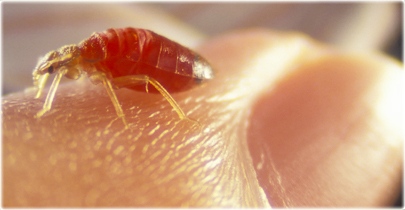
 Residence
  Location
Bed Bugs Sniffing Dogs

 A detection dog or sniffer dog is a dog that is trained to and works at using its senses (almost always the sense of smell) to detect substances such as explosives, illegal drugs, or blood. Bed Bug sniffing dogs are trained to work for food and love, not profits. Bed Bug detecting canines can 'œsweep' a standard hotel room in 2-3 minutes with pin-point accuracy. A dog's 'œodor image' is significantly more complex than a human's perception of photographs. For example, from a single drop of urine one canine can identify another K-9's sex, diet, health and even determine whether this dog is dominant or submissive! Dog's can easily distinguish between ten different odor types. They have been employed successfully to detect mold, termites, drugs and arson components. Use of Bed Bug detecting canines has been acknowledged in the court system as an effective tool. Bed Bug dogs are accurate over 90% of the time and identify Bed Bug harborage in walls, under floors and other inaccessible areas. Humans are traditionally limited to visual inspections rearing accurate results 30% of the time. Humans can take up to 20 minutes per room performing visual examinations! Not good.
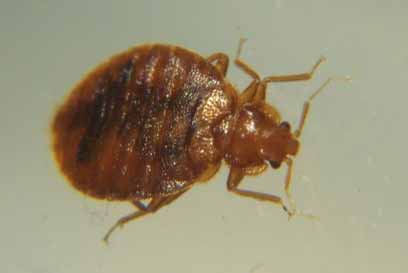 A trained professional inspector will only detect visible signs of bed bugs in a room with an accuracy rate of only about 30%. To find activity inside walls, baseboards, even under carpets, a room would have to otherwise be stripped down beyond the bare walls! Due to a dog's keen sense of smell, our trained dog Tracker can detect bed bugs even inside walls - with 90% accuracy, making his inspection a more thorough and accurate one. A more accurate detection means that if there is bed bug activity, Tracker will be alert to it and control measures can begin.
In the United States and elsewhere, dogs have been successfully used by law enforcement agencies to locate firearms, ammunition, explosives, illegal drugs, and missing persons. The same training used for these purposes is now being used to train dogs to search for bed bugs. Our dog, Tracker, can smell through walls, floors, and bedding - long before humans can see any visible signs. Tracker can crawl into tight spaces that human inspectors cannot. Early detection can prevent infestation from bed bugs by treating hot spots before the damage is done.
Tracker has completed more than 1000 hours of training, demonstrating his accuracy in detecting bed bugs. Tracker and all of our dog handlers are certified for bed bug detection by leading experts in the training of not just bed bug-sniffing, but mold-, bomb- and drug-sniffing dogs as well. Tracker is a powerful new weapon against the elusive bed bug and can inspect and detect these insects in homes and commercial buildings with an accuracy that human inspectors cannot match.
Gracie is the only dog working for a housing authority that has been certified by the National Entomology Scent Detection Canine Association (NESDCA). But she's certainly not the only dog sniffing out beg bugs. Dogs like Gracie are increasingly being used in private homes, hotels, and other businesses.
 There are around 100 working bed bug dogs in the U.S. today, according to Greg Baumann, senior scientist at the National Pest Management Association. More are likely on the way. The Florida-based J & K Canine Academy has trained 60 dogs to detect bed bugs over the past three years and currently has a waiting list.
Well-trained dogs will certainly not have a hard time finding work. There's been a resurgence of bed bugs thanks to international travel, immigration, and other factors. Bed bugs are turning up in fancy hotels, hospitals, dorm rooms, private houses, and crowded apartment buildings.
And they're not restricted to your bedroom, although that's where they commonly reside. They can live in furniture, under loosened wallpaper, and a variety of other places. The Environmental Protection Agency held a National Bed Bug Summit in April 2009 because the insects have become so prevalent.
There's no evidence that bed bugs transmit disease, according to a recently published clinical review in the Journal of the American Medical Association. But still, dealing with bed bugs can be a major hassle. It can take a lot of time, and sometimes money, to banish them from your home.
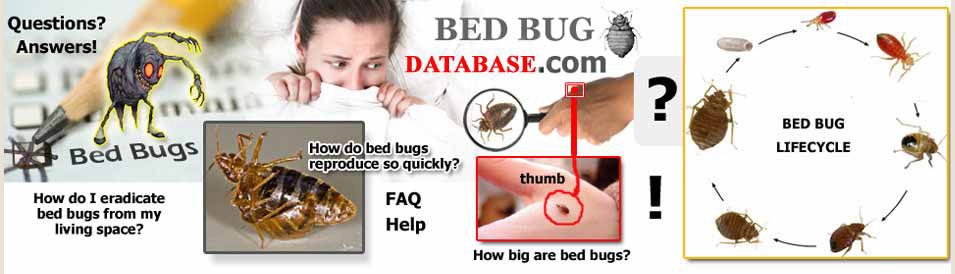

 The easiest trapping method is to place double-sided carpet tape in long strips near or around the bed and check the strips after a day or more.
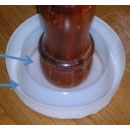 The technique can also be used to help prevent bed bugs from crawling up along walls where warranted. Long strips of this taping method (i.e. curled duct tape over painter's tape) can be used on standard floors to cordon off, surround, and isolate infested furniture, to protect clean furniture, or as part of a treatment effort to help prevent bed bugs from crawling toward specific areas. If used this extensively, it then becomes particularly more important to apply a protective layer of painter's tape first to prevent the duct tape from damaging and/or ruining painted surfaces or from leaving behind a sticky residue when finally pulled up. It should also be noted that the width of the painter's tape can be as narrow as one inch (which is typically less expensive per foot than wider versions of masking tape) since regular duct tape, though much wider initially, will fit within the one-inch width of the painter's tape'”after the duct tape has been curled over on itself lengthwise.
  Do bed bugs carry disease? Well, bed bugs carry 24 known pathogens, according to Baumann. Do bed bugs transmit disease? Nope, bed bug bites won't make you sick unless, of course, the bites get infected. Baumann says that the World Health Organization (WHO) conducted research in Africa which produced no documentation that the little ankle biters can transmit disease.
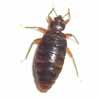 Bed bugs seem to possess all of the necessary prerequisites for being capable of passing diseases from one host to another, but there have been no known cases of bed bugs passing disease from host to host. There are at least twenty-seven known pathogens (some estimates are as high as forty-one) that are capable of living inside a bed bug or on its mouthparts. Extensive testing in laboratory settings concludes that bed bugs are unlikely to pass disease from one person to another. Therefore bed bugs are less dangerous than some more common insects such as the flea. Bed bugs cannot give you a disease like AIDS. This is one of the first things many people become worried about when they get bitten, which makes sense given how many things you hear you can get from other insects like mosquitoes. Bed bugs, however, won't transmit anything to you. They often have diseases inside them, but for whatever reason people don't catch them from a bed bug.
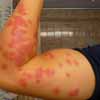 Since bedbugs are parasites that feed on human blood as well as feeding on blood of other mammals, asking ourselves whether bedbugs transmit diseases is only natural. After all, mosquitoes live off human blood and depending on the strain of mosquito; they transmit diseases such as malaria, encephalitis, and dengue fever. Fleas live off human blood as well as blood from other animals and they transmit bubonic plague. What's more, bedbugs do carry human viral and bacterial agents that can theoretically cause diseases. Bedbugs also carry protozoa and parasitic worms. In furtherance, bedbugs leave fecal droppings (spots) in areas they occupy. This includes mattresses, sheets, blankets, and could even include people's pajamas or body partsbed bugscrawl on.