 Residence
  Location
Categories
- Bed Bug
- Bed Bug Cream
- BED BUG DATABASE
- Bed Bug Home Remedies
- Bed Bug Oil
- Bed Bug Remedies
- Bed Bug Spray
- Bed Bugs New York
- Bed Bugs Vancouver
- Bed Bugs World
- Bed Bugs American Samoa
- Bed Bugs Canada
- Bed Bugs Guam
- Bed Bugs North Mariana islands
- Bed Bugs Puerto Rico
- Bed Bugs United States
- Bed Bugs Alabama
- Bed Bugs Alaska
- Bed Bugs Arizona
- Bed Bugs Arkansas
- Bed Bugs California
- Bed Bugs Colorado
- Bed Bugs Connecticut
- Bed Bugs Delaware
- Bed Bugs Florida
- Bed Bugs Georgia
- Bed Bugs Hawaii
- Bed Bugs Idaho
- Bed Bugs Illinois
- Bed Bugs Indiana
- Bed Bugs Iowa
- Bed Bugs Kansas
- Bed Bugs Kentucky
- Bed Bugs Louisiana
- Bed Bugs Maine
- Bed Bugs Maryland
- Bed Bugs Massachusetts
- Bed Bugs Michigan
- Bed Bugs Minnesota
- Bed Bugs Mississippi
- Bed Bugs Missouri
- Bed Bugs Montana
- Bed Bugs Nebraska
- Bed Bugs Nevada
- Bed Bugs New Hampshire
- Bed Bugs New Jersey
- Bed Bugs New Mexico
- Bed Bugs New York
- Bed Bugs North Carolina
- Bed Bugs North Dakota
- Bed Bugs Ohio
- Bed Bugs Oklahoma
- Bed Bugs Oregon
- Bed Bugs Pennsylvania
- Bed Bugs Rhode Island
- Bed Bugs South Carolina
- Bed Bugs South Dakota
- Bed Bugs Tennessee
- Bed Bugs Texas
- Bed Bugs Utah
- Bed Bugs Vermont
- Bed Bugs Virgin Islands
- Bed Bugs Virginia
- Bed Bugs Washington
- Bed Bugs Washington DC
- Bed Bugs West Virginia
- Bed Bugs Wisconsin
- Bed Bugs Wyoming
- BedBug Removal
- BedBugs in Michigan
- Canada Bed Bugs
- Do it yourself Bed Bug
- Exterminator Bed Bugs
- Health
- Pest Inspection
- Toronto Bed Bugs
- Welcome to Bed Bugs
Registry Sites List
- Bronx Bed Bug Registry Infestation Maps, Residential And Hotel
- Brooklyn Bed Bug Registry Infestation Maps, Residential And Hotel
- Manhattan Bed Bug Registry Infestation Maps, Residential And Hotel
- Nyc Bed Bug Registry Infestation Maps, Residential And Hotel
- Queens Bed Bug Registry Infestation Maps, Residential And Hotel
- Staten Island Bed Bug Registry Infestation Maps, Residential And Hotel
Recommended Sites
Author Archives: pcenet
News Links:
Bed Bugs in New York City | New York vs Bed Bugs
NYC Department of Health healthy homes bed bug guide^
The New York City Department of Health and Mental Hygiene has published a bed bug guide (PDF) that is also available for download in Spanish (PDF), Chinese (PDF), Russian (PDF), Creole (PDF), Italian (PDF), and Korean (PDF) check for other languages that may be translated here. Call 311 to request a free copy of the English-language printed booklet (other languages available only as downloads). You can use this basic and easy-to-follow guide to spread awareness about bed bugs and to educate neighbors, landlords and friends who are new to the problem. (Check our resources page for more bed bug management guides.)
Click to download PDF
Starting December 3, 2010 DSNY will require all mattresses and box springs set out for collection to be encased and sealed. Full text of the rule (PDF):
1-04.1 Collection of bedding. (a) Definitions. For purposes of this section, Bedding shall mean any mattress or box spring which can be used by any human being for sleeping or reclining purposes. (b) Any person disposing of bedding for Department collection shall enclose such bedding within a plastic bag. Such bag shall be constructed in such a manner and be of such size as to readily contain the bedding to be disposed of. Such bag must be securely sealed after the bedding is placed inside. (c) Failure to enclose any bedding placed at the curbside or other designated area for collection by the department within a plastic bag pursuant to this section shall be a violation of 16-120 of the New York City Administrative Code.
Full enforcement will begin January 3, 2011. The fine will be $100. The rules are spotlighted on the front page of DSNYs website. See the press release, a graphic notice (PDF) available as a download, and a note from the commissioner in which he makes an additional recommendation:
that plastic mattress bags be placed around the discarded bedding before it is removed from the room out to the curb to further prevent bed bugs from infesting other parts of the home or apartment building.
Sealing items in the room before removal is an important principle of bed bug management and you should practice that for anything that is being removed from an infested room.
The rule applies to all mattresses and box springs, not just bed bug-infested ones.
Here are a few other things you should know. The mattress refurbishing industry does not have effective sanitizing protocols in place, and yet mattresses and box springs in the city are routinely scavenged for this purpose before they are ever collected by sanitation. Therefore, the closer to collection time that mattresses and box springs can be placed on the curb, the better, if at all possible. It is also good to attempt to make things unusable or unattractive before sealing, as well as placing a clear warning sign on items that are infested, as ordinary people in your neighborhood will also pick up stuff from the trash and risk exposure.
Follow this link:
Bed Bugs in New York City | New York vs Bed Bugs
Posted in Bed Bugs New York
Comments Off on Bed Bugs in New York City | New York vs Bed Bugs
Bed Bugs Florida – Bed Bug.org
Bed Bugs in Florida
Bed bugs are sweeping across the country. For the better part of a century, Americans have lived in the comfort of knowing that the pests were almost completely eradicated. Following major spraying operations in the years following World War II, the United States freed itself of most pests, with just a few hardy species remaining. But bed bugs appear to be enjoying a massive, nationwide return.
Most reports of bed bug infestation have occurred in major cities, particularly those in the countrys densely populated East Coast. New York City and Philadelphia are considered epicenters of the bed bug crisis, with hundreds of private apartment complexes hosting the parasites and a series of major hotel chains and commercial buildings falling victim to the ultra-hardy annoyances.
For the most part, Florida has been able to escape the bed bug plague. Due to its relative geographic isolation and the states large pest population, regular spraying and elimination efforts have removed most major insects from Floridas homes. But in between the common roach infestations, nasty bed bugs are popping up left and right, and spreading between buildings at an alarmingly rapid pace.
Major cities in the state have reported sporadic outbreaks, with hotels in Fort Lauderdale and Miami forced to temporarily close due to the parasitic pests. Outbreaks in private residences have been rare and lacking in any specific infestation patterns, indicating that the major pests are likely arriving on city streets due to international travel and short-term visitors.
Either way, the bugs are a major annoyance for Floridas permanent population, an irritating pest for its annual traveler load, and a giant threat to the states lucrative tourism industry. While authorities have yet to implement official measures similar to those seen in New York City and other areas that are affected by the bugs, it remains a possibility in many major commercial and residential centers.
Weve outlined the origin and spread of bed bugs in Florida below, along with a detailed list of the bugs most probable targets. If youre concerned about a possible infestation or merely planning to take preventative measures, please use our detailed guide to diagnose and treat any potential issues.
When did bed bugs become such a visible pest in Florida?
Floridas bed bug entry date is difficult to pinpoint. The state, along with many other regions in the country, has seen a significant increase in the amount of international tourists visiting its shores over the last decade. Travel industry analysts have pointed to the increased wealth of many Asian nations as a potential reason for the increase in international arrivals news thats very good economically.
But the increase in international arrivals also allows for the arrival of bed bugs, many of which are believed to have originated overseas. The United States had all but completely eradicated the pests during the latter half of the 20th century, but they appear to be back with a vengeance. Scientists are skeptical to blame any one group for their return, although international travelers do fit the bill.
View original post here:
Bed Bugs Florida - Bed Bug.org
Posted in Bed Bugs Florida
Comments Off on Bed Bugs Florida – Bed Bug.org
EENY140/IN297: Bed Bug, Cimex lectularius Linneaus (Insecta …
Introduction
Sometimes referred to as "red coats," "chinches," or "mahogany flats" (USDA 1976), bed bugs, Cimex lectularius Linnaeus, are blood feeding parasites of humans, chickens, bats and occasionally domesticated animals (Usinger 1966). Bed bugs are suspected carriers of leprosy, oriental sore, Q-fever, and brucellosis (Krueger 2000) but have never been implicated in the spread of disease to humans (Dolling 1991). After the development and use of modern insecticides, such as DDT, bed bug infestations have virtually disappeared. However, since 1995, pest management professionals have noticed an increase in bed bug related complaints (Krueger 2000).
Adult bed bug, Cimex lectularius Linnaeus, feeding. Photography by: Joseph Smith, University of Florida
Human dwellings, birds nests, and bat caves make the most suitable habitats for bed bugs since they offer warmth, areas to hide, and most importantly hosts on which to feed (Dolling 1991). Bed bugs are not evenly distributed throughout the environment but are instead concentrated in harborages (Usinger 1966). Within human dwellings, harborages include cracks and crevices in walls, furniture, behind wallpaper and wood paneling, or under carpeting (Krueger 2000). Bed bugs are usually only active during night but will feed during the day when hungry (Usinger 1966). Bed bugs can be transported on clothing, in traveler's luggage, or in bedding and furniture (USDA 1976) but lack appendages to enable them to cling to hair, fur, or feathers, so are rarely found on hosts (Dolling 1991).
The adult bed bug is a broadly flattened, ovoid, insect with greatly reduced wings (Schuh and Slater 1995). The reduced fore wings, or hemelytra, are broader than they are long, with a somewhat rectangular appearance. The sides of the pronotum are covered with short, stiff hairs (Furman and Catts 1970). Before feeding, bed bugs are usually brown in color and range from 6 to 9.5 mm in length. After feeding, the body is often swollen and red in color (USDA 1976).
Dorsalview of an adult bed bug, Cimex lectularius Linnaeus. Photograph by: David Almquist, University of Florida
Lateral view of an adult bed bug, Cimex lectularius Linnaeus. Photograph by: Joseph Smith, University of Florida
Nymph of the bed bug, Cimex lectularius Linnaeus. Photograph by, Joseph Smith, University of Florida
The two bed bugs most important to man are the common bed bug, Cimex lectularius, and the tropical bed bug, Cimex hemipterus. These two species of bed bugs can easily be distinguished by looking at the prothorax, the first segment of the thorax. The prothorax of the common bed bug is more expanded laterally and the extreme margins are more flattened than that of the tropical bed bug (Ghauri 1973).
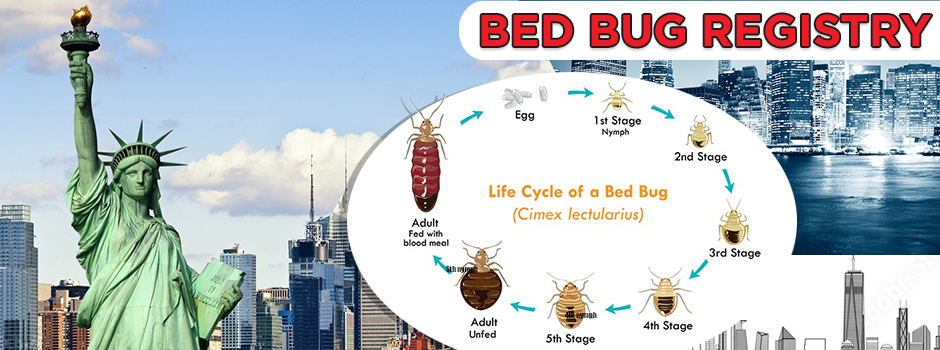
Because of their confined living spaces, copulation among male and female bed bugs is difficult. The female possesses a secondary copulatory aperture, Ribaga's organ or paragenital sinus, on the fourth abdominal sternum where spermatozoa from the male are injected. The spermatozoa then migrate to the ovaries by passing through the haemocoel, or body cavity (Dolling 1991). The female bed bug lays approximately 200 eggs during her life span at a rate of one to 12 eggs per day (Krueger 2000). The eggs are laid on rough surfaces and coated with a transparent cement to adhere them to the substrate (Usinger 1966). Within six to 17 days bed bug nymphs, almost devoid of color, emerge from the eggs. After five molts, which takes approximately ten weeks, the nymphs reach maturity (USDA 1976).
See original here:
EENY140/IN297: Bed Bug, Cimex lectularius Linneaus (Insecta ...
Posted in Bed Bugs Florida
Comments Off on EENY140/IN297: Bed Bug, Cimex lectularius Linneaus (Insecta …
Bed Bugs in Florida | Everything you need to know about bed bugs …
The warm humid climate of Florida offers a suitable condition for Bed bugs that then feeds on human and animal blood. However, Florida wasnt always a thriving environment for Bedbugs during the time when DDT was used to control the infestation of Bed bugs back then. When DDT was then later banned as it was found to be unsafe for people, animals and the environment, Bed bugs then resurfaced. Todays surge of Bed bugs is because of domestic and international travel where Bed bugs can hitch a ride in luggage.
The Bed bugs in Florida have become rampant in many homes, buildings, hospitals, delivery trucks, dormitories and hotels much to the dismay of residents. Even if Bed bugs do not transmit dangerous diseases they can cause severe skin irritation and soreness and unbearable mental and emotional stress. The Cimex hemipterus Bed bugs species can be found in the tropical regions such as Florida and have the preference of wood and paper rather than stone, plaster and textiles. They originally used to feed on bats, but when man began living in caves, these species began to feed on humans till today.
These bed bugs are of light to dark reddish brown in color with flat oval bodies measuring inches long. However, once these Bed bugs feed, their body doubles in size having an elongated and blood filled swollen body. These Bed bugs do not attach themselves to their host, but simply feeds on them while asleep and pierces the skin using an elongated beak consisting of 2 tubes where 1 is used for injecting anesthetic and anti-coagulant saliva that prevents blood clotting and numbs the skin. The other tube is then used to suck the blood out.
Reproduction of Bed Bugs
The female adult Bed bugs lay eggs in 3 to 8 batches that hatch in 6 to 14 days. The female can lay over 200 to 500 eggs depending on the availability of blood as their food source, because they require blood in order to reproduce. Their mating method is called traumatic insemination where the males insert their penis positioned at the base or the paramere, into a paragenital sinus of the female Bed bugs abdominal and ejects the sperm. The male Bed bugs need to feed prior to mating and the female Bed bugs need to feed before they lay their eggs. It has been studied that as males mate with the female Bed bugs, they also possess a certain homosexual behavior.
They can also store a male Bed bugs sperm for up to 6 weeks. A newly hatched Bed bug will have reddish to purple shade of color. While the nymph will be translucent and would have to molt 5 times within 35 to 48 days, till it becomes a full adult. And thus the cycle repeats itself.
Detection of Bed Bugs
Detecting Bed bugs is a task that requires patience as it takes time and a lot of effort as they only feed when their host is asleep. When you are able to detect the infestation of Bed bugs early, then your problems may not be as complicated as it may seem. In cases of low infestation, Bed bug canines can detect Bed bugs even if they are just a few, or you can opt for sticky traps and other devices that are cheaper than having to use other forms of treatment for large infestations.
Controlling Bed Bugs
Your first option is to always clean up any Bed bugs that are visible. All carpets and furniture and every corner must be vacuumed. After vacuuming, the bag must be sealed in a plastic bag or container and placed in a freezer for a week prior to disposing. Then have all the clothes and bed sheets in hot water and dried at a high setting as well or under the sun.
See the rest here:
Bed Bugs in Florida | Everything you need to know about bed bugs ...
Posted in Bed Bugs Florida
Comments Off on Bed Bugs in Florida | Everything you need to know about bed bugs …
bed bug – Cimex lectularius Linnaeus – UNIVERSITY OF FLORIDA …
common name: bed bug scientific name: Cimex lectularius Linnaeus (Insecta: Hemiptera: Cimicidae) Introduction - Distribution - Description - Life Cycle - Survey and Management - Selected References Introduction (Back to Top)
Sometimes referred to as "red coats," "chinches," or "mahogany flats" (USDA 1976), bed bugs, Cimex lectularius Linnaeus, are blood feeding parasites of humans, chickens, bats and occasionally domesticated animals (Usinger 1966). Bed bugs are suspected carriers of leprosy, oriental sore, Q-fever, and brucellosis (Krueger 2000) but have never been implicated in the spread of disease to humans (Dolling 1991). After the development and use of modern insecticides, such as DDT, bed bug infestations have virtually disappeared. However, since 1995, pest management professionals have noticed an increase in bed bug related complaints (Krueger 2000).
Figure 1. Adult bed bug, Cimex lectularius Linnaeus, feeding. Photograph by Joseph Smith, University of Florida.
Human dwellings, birds nests, and bat caves make the most suitable habitats for bed bugs since they offer warmth, areas to hide, and most importantly hosts on which to feed (Dolling 1991). Bed bugs are not evenly distributed throughout the environment but are instead concentrated in harborages (Usinger 1966). Within human dwellings, harborages include cracks and crevices in walls, furniture, behind wallpaper and wood paneling, or under carpeting (Krueger 2000). Bed bugs are usually only active during night but will feed during the day when hungry (Usinger 1966). Bed bugs can be transported on clothing, in traveler's luggage, or in bedding and furniture (USDA 1976) but lack appendages to enable them to cling to hair, fur, or feathers, so are rarely found on hosts (Dolling 1991).
The adult bed bug is a broadly flattened, ovoid, insect with greatly reduced wings (Schuh and Slater 1995). The reduced fore wings, or hemelytra, are broader than they are long, with a somewhat rectangular appearance. The sides of the pronotum are covered with short, stiff hairs (Furman and Catts 1970). Before feeding, bed bugs are usually brown in color and range from 6 to 9.5 mm in length. After feeding, the body is often swollen and red in color (USDA 1976).
Figure 2. Dorsal view of an adult bed bug, Cimex lectularius Linnaeus. Photograph by David Almquist, University of Florida.
Figure 3. Lateral view of an adult bed bug, Cimex lectularius Linnaeus. Photograph by Joseph Smith, University of Florida.
Read more here:
bed bug - Cimex lectularius Linnaeus - UNIVERSITY OF FLORIDA ...
Posted in Bed Bugs Florida
Comments Off on bed bug – Cimex lectularius Linnaeus – UNIVERSITY OF FLORIDA …